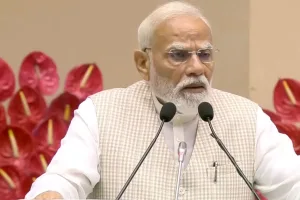
When Prime Minister Narendra Modi completes 4,399 consecutive days in office on Wednesday, June 10, he will cross a political milestone that few thought would be matched in modern India. With that, Modi will officially surpass Jawaharlal Nehru’s record of 4,398 uninterrupted days as an elected Prime Minister, becoming the longest-serving democratically elected Prime Minister in the country’s history.
The moment is significant not merely because of the numbers involved. It represents the crossing of a historical bridge between two defining political epochs of independent India — the era of Jawaharlal Nehru, who laid the foundations of a newly independent nation, and the era of Narendra Modi, who has presided over India’s rise as an aspiring global power in the digital age.
Advertisement
For students of Indian politics, the symbolism is striking. Nehru’s uninterrupted tenure from May 1952 until his death in May 1964 coincided with the formative years of the Republic. India was a young nation grappling with the scars of Partition, widespread poverty, low literacy and fragile institutions. The challenge before Nehru was not merely to govern but to build a nation from the ground up.
His government established the architecture of parliamentary democracy, strengthened constitutional institutions and proved that universal adult franchise could function successfully in a vast and diverse country. Under his leadership, India embarked on planned economic development through the Five-Year Plans, built iconic public sector enterprises and created what he famously described as the “temples of modern India” — large dams, steel plants and scientific institutions.
The foundations of India’s scientific and technological capabilities were also laid during his tenure. Institutions such as the Indian Institutes of Technology, the Department of Atomic Energy and numerous research establishments emerged from Nehru’s belief that scientific temper would be the key to India’s future.
In foreign policy, Nehru’s leadership helped shape the Non-Aligned Movement, allowing India to maintain strategic autonomy during the Cold War while projecting its voice on the global stage.
“Whatever one’s political perspective, it is impossible to understand modern India without understanding Nehru’s contribution to institution-building and democratic consolidation,” noted political historian Ramachandra Guha in several of his writings on post-Independence India.
More than six decades later, Modi’s rise reflects a very different India and a very different political journey.
Unlike Nehru, whose emergence was intertwined with the freedom struggle and the Congress movement, Modi rose from the organisational ranks of the Bharatiya Janata Party and the Rashtriya Swayamsevak Sangh. His political ascent was built through electoral success, first as Chief Minister of Gujarat and later as Prime Minister.
Since taking office on May 26, 2014, Modi has secured three consecutive mandates in 2014, 2019 and 2024 — a feat unprecedented for a non-Congress leader. He is also the first non-Congress Prime Minister to lead a majority government for three successive terms.
His decade in office has coincided with one of the most transformative periods in India’s economic and technological evolution.
The expansion of Digital Public Infrastructure through Aadhaar-linked governance, the Jan Dhan-Aadhaar-Mobile architecture and the Unified Payments Interface has fundamentally altered how citizens interact with the state and the economy. India today processes billions of digital transactions every month, a transformation that has drawn attention from governments and multilateral institutions across the world.
“India’s digital public infrastructure has emerged as a global model for inclusive digital transformation,” according to several assessments by international institutions, including the World Bank and the International Monetary Fund.
Modi’s tenure has also witnessed a massive infrastructure push. New highways, expressways, airports, freight corridors and railway modernisation projects have altered India’s physical landscape. Flagship initiatives such as PM Gati Shakti, Bharatmala, Sagarmala and the rollout of Vande Bharat trains have become central pillars of the government’s development narrative.
Alongside infrastructure, welfare delivery has undergone a significant transformation. Programmes such as the Pradhan Mantri Awas Yojana, Jal Jeevan Mission, Swachh Bharat Mission and Ayushman Bharat have sought to improve living standards through direct intervention in housing, sanitation, drinking water and healthcare.
The Modi years have also been marked by major structural economic reforms, including the Goods and Services Tax, the Insolvency and Bankruptcy Code and Production-Linked Incentive schemes aimed at boosting manufacturing and attracting investment.
Globally, India’s diplomatic profile has expanded considerably. From the successful presidency of the G20 in 2023 to growing strategic partnerships across continents, India has positioned itself as a leading voice of the Global South while simultaneously strengthening ties with major powers.
Foreign policy expert C Raja Mohan has argued that India’s growing global influence reflects “a shift from traditional non-alignment to a more flexible and pragmatic multi-alignment strategy.”
Yet the significance of June 10 extends beyond governance records and policy achievements.
Political longevity in a democracy is often the ultimate test of public acceptance. In an era characterised by coalition politics, fragmented mandates and rapidly changing voter preferences, sustaining political dominance for over a decade is itself a remarkable achievement.
The milestone also underscores the evolution of Indian democracy. When Nehru governed, the Congress party towered over the political landscape with little effective opposition. Modi’s tenure, by contrast, has unfolded amid intense electoral contests.
The comparison between Nehru and Modi will inevitably invite debate because both leaders have come to symbolize different visions of India. Nehru’s legacy rests on institution-building, secular democracy and planned development. Modi’s legacy is increasingly associated with welfare delivery at scale, digital governance, infrastructure expansion and a more assertive global posture.
Historians may continue to argue over who shaped India more profoundly. Political opponents and supporters will continue to contest their respective records. But what remains indisputable is that both leaders have defined their eras in ways few others have.
As Modi crosses the 4,399-day mark, the milestone serves not merely as a statistical achievement but as a reminder of the remarkable continuity of India’s democratic journey. From the nation-building years of Nehru to the aspirational and technology-driven India of Modi, the story is ultimately about the evolution of the world’s largest democracy itself.
On Wednesday, therefore, the record books will register a new name at the top. But the larger story is not simply about who served longer. It is about how two leaders, separated by generations and ideologies, came to shape two of the most consequential chapters in the history of independent India.